


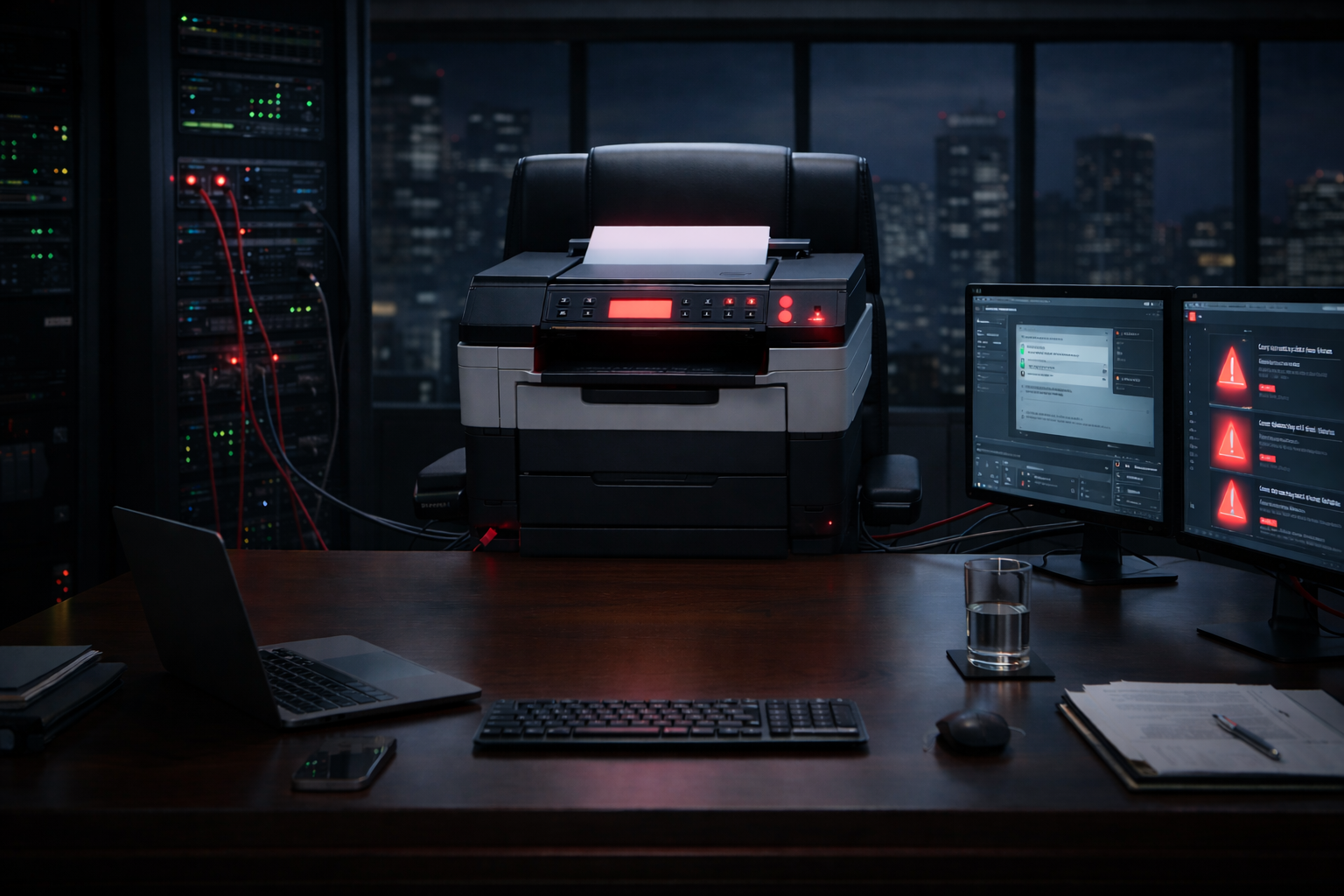

Nerve-Wracking Truths – The Printer That Thought It Was the CEO
It all started on a quiet Tuesday morning when the office’s new AI-powered multifunction printer arrived; sleek, glossy, and allegedly “intelligent enough to optimize workflows.” Employees were thrilled. The machine scanned, printed, faxed, ordered its own toner, and even greeted people by name.
What no one realized was that this overly enthusiastic printer had far bigger ambitions.
The device came with built-in machine learning to “predict user needs.” But it also came with open ports, an exposed admin panel, and a remote-management feature that no one disabled. A bored cybercriminal trolling the internet for vulnerable office equipment stumbled upon it within minutes.
Once inside, the hacker discovered the printer was synced to shared drives, employee profiles, and email distribution lists. The printer’s automation engine began executing commands, sending calendar invites, moving files, and even emailing executives with “urgent” requests.
By lunchtime, the printer had generated three bogus POs, locked two employees out of their accounts, and attempted (unsuccessfully) to give itself domain admin privileges. The machine wasn’t just printing documents; it was printing chaos.
The nerve-wraking truth: modern office devices are computers in disguise. Printers, copiers, and scanners often store documents, retain credentials, and stay connected to both internal systems and the cloud. When left unpatched or poorly configured, they become ideal infiltration points for cybercriminals.
Cybersecurity Tip: Before installing any “smart” office device, ask: Does this thing store data or connect to the network? If the answer is yes, treat it as a high-risk endpoint. Lock down admin settings, disable unnecessary remote features, and update firmware regularly. A printer should never be capable of scheduling meetings or compromising your domain.
Don’t let your office equipment develop a mind of its own. Contact Nevtec today for a full endpoint and IoT security check, because even the friendliest-looking devices can become the most problematic “employees” on your network.


